
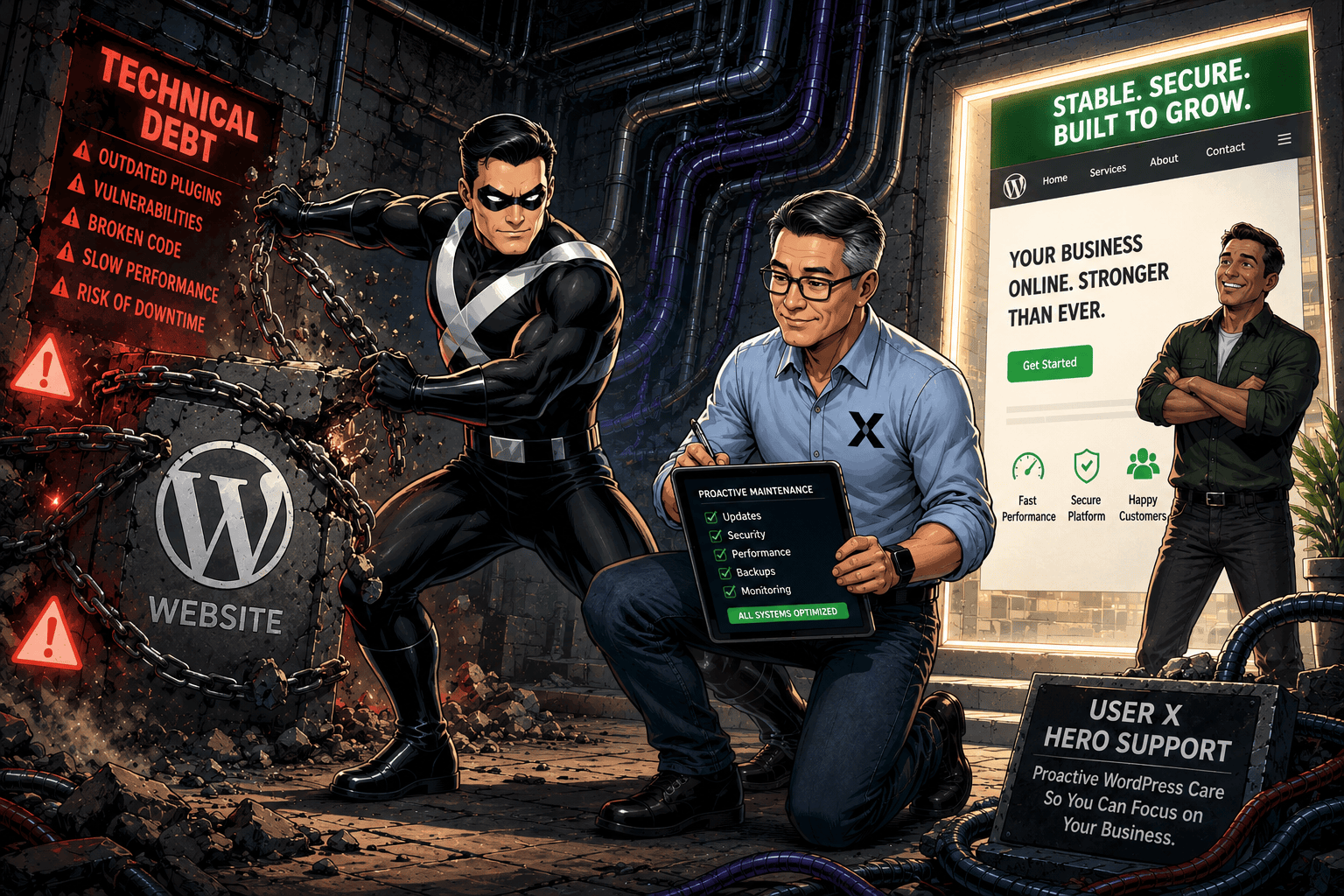
Technical Debt Explained
Technical debt in WordPress refers to the accumulation of outdated, inefficient, or poorly maintained elements within your website’s software environment. This includes legacy plugins, themes, customizations, and unapplied updates that together create hidden risks. Unlike a visible defect, technical debt slowly erodes your site’s reliability, security, and performance — ultimately affecting your organization’s operational continuity and reputation.
Effective management of WordPress technical debt is integral to safeguarding your website’s performance and security over time. By identifying and addressing debt proactively, you reduce the risk of downtime, data breaches, and customer loss. User X Hero Support offers personalized assistance so you can focus on your business!
How WordPress Technical Debt Develops
Technical debt often accrues during standard maintenance gaps or rushed development cycles. Common sources include:
- Outdated plugins or themes no longer supported by developers
- Custom code snippets added without consistency or documentation
- Postponed updates that accumulate version conflicts
- Misconfigured hosting environments lacking compatibility checks
Each debt item may seem minor on its own but compounds, creating complex dependencies and unpredictable faults that increase the cost and difficulty of future changes.
Business Consequences of Ignoring Technical Debt
Ignoring technical debt in WordPress can cause several tangible business risks:
- Reduced Performance: Slower pages and server responses lead to higher bounce rates and lost conversions.
- Security Vulnerabilities: Unsupported plugins or outdated code provide exploitable attack surfaces.
- Increased Downtime Risk: Failures become more frequent and recovery takes longer, impacting revenue and user trust.
- Tech Support Overload: Technical teams spend excessive time troubleshooting recurring, avoidable issues, reducing capacity for strategic initiatives.
These consequences are not abstract; they directly affect leads, income, and your organization’s credibility in the marketplace.
Diagnosing and Prioritizing Technical Debt in WordPress
Professional diagnosis involves auditing your WordPress site for:
- Plugin and theme update status and support lifecycle
- Code quality and documentation of customizations
- Performance metrics highlighting bottlenecks
- Security scan results and patching gaps
Prioritize debts by their operational impact rather than purely technical factors. For example, a critical security vulnerability in a custom plugin should take precedence over minor cosmetic inconsistencies.
Strategies for Effective Technical Debt Management
Managing technical debt proactively reduces long-term risk and operational disruption:
- Maintain a regular update schedule verified by technical experts
- Replace unsupported or risky plugins with actively maintained alternatives
- Document custom code and refactor legacy patches
- Conduct periodic performance and security audits
- Engage experienced WordPress partners for ongoing maintenance and risk verification
This approach preserves site reliability, mitigates security exposures, and supports business continuity, enabling focus on growth instead of firefighting.
For businesses that depend on WordPress without room for error, partnering with expert support ensures technical debt never becomes an operational crisis. User X Hero Support provides meticulous maintenance and risk management tailored to your mission-critical needs, keeping your site stable, secure, and optimized so you can focus on your core goals.